
New Study Highlights the Potential of Stellate Ganglion Block Beyond PTSD
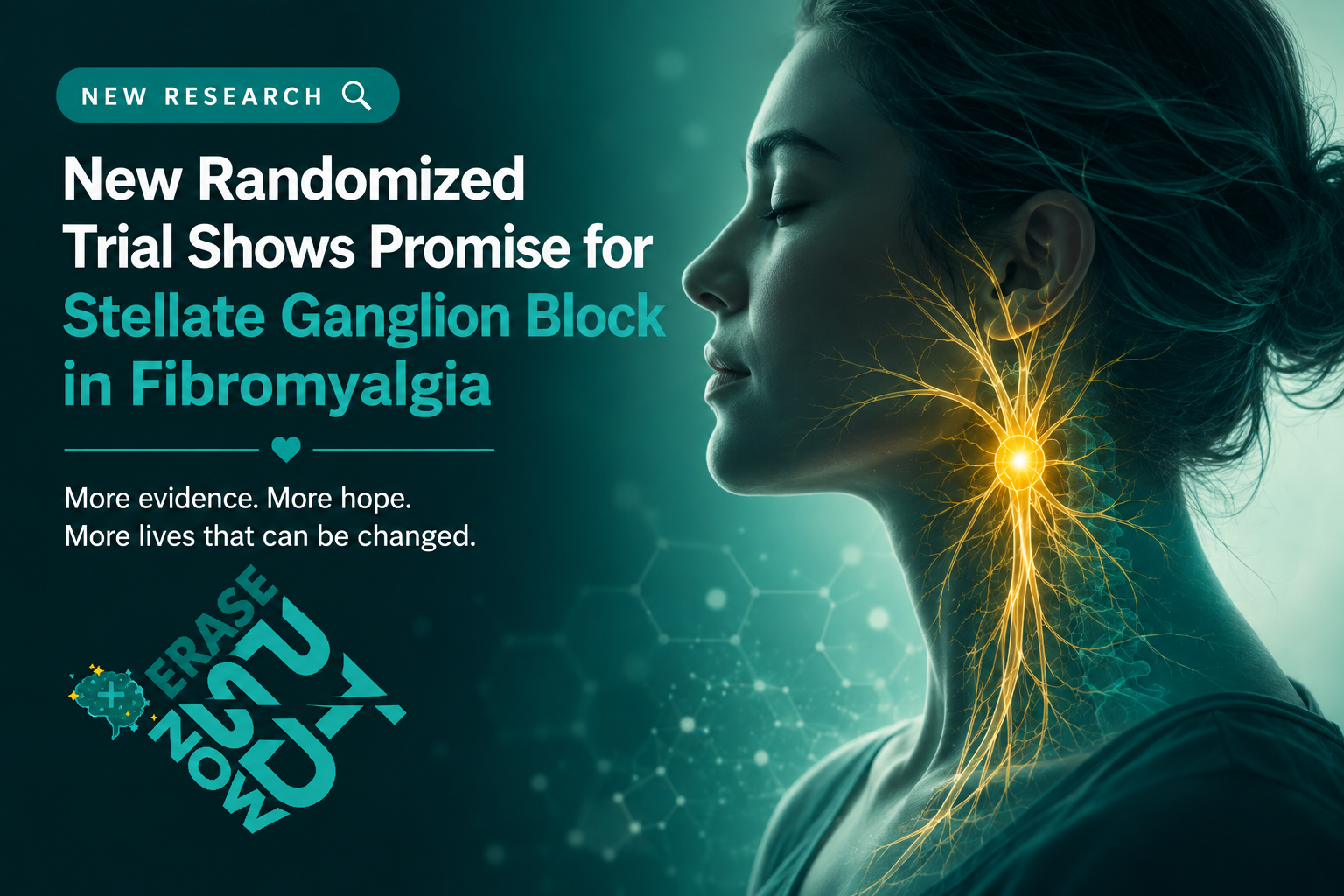
One of the most exciting aspects of medical research is watching discoveries in one field begin to influence another. A newly published randomized, sham-controlled clinical trial examining Stellate Ganglion Block (SGB) for treatment-resistant fibromyalgia is a perfect example.
While Erase PTSD Now is dedicated to expanding access to SGB for individuals living with post-traumatic stress injury (PTSI/PTSD), this study demonstrates something much broader: researchers continue to explore how regulating the sympathetic nervous system may improve a variety of conditions linked to chronic stress, pain, and autonomic dysfunction.
Researchers evaluated adults with treatment-resistant fibromyalgia who continued taking their standard medication (duloxetine) while receiving either ultrasound-guided SGB or a sham procedure.
The results were encouraging:
Patients receiving SGB experienced significantly greater improvements in overall fibromyalgia symptoms than those receiving the sham procedure.
Pain scores were also significantly lower in the SGB group.
Nearly two-thirds of patients experienced clinically meaningful improvement within one week.
Almost half maintained those improvements one month later.
No serious complications were reported, and side effects were temporary and mild.
Fibromyalgia and PTSD are very different conditions, but researchers have identified important similarities.
Both have been associated with:
Dysregulation of the autonomic nervous system
Increased sympathetic ("fight-or-flight") activity
Chronic stress responses
Neuroinflammation
Because SGB temporarily modulates the sympathetic nervous system, scientists continue to investigate whether it may help restore balance in conditions where the body's stress response has become chronically overactive.
This research is particularly noteworthy because it was designed as a randomized, sham-controlled clinical trial, the type of study considered among the strongest forms of clinical evidence.
Equally important, the authors were transparent about the study's limitations. They acknowledged that the trial was relatively small, followed patients for only one month, and relied on patient-reported outcomes. They also discussed the possibility that some participants may have recognized they received the active treatment because of the temporary physical signs that accompany a successful SGB.
Rather than overstating their findings, the researchers concluded that larger, multicenter studies with longer follow-up are needed to confirm these promising results.
The study also cites the work of Dr. Eugene Lipov, founder of Erase PTSD Now, whose research has helped advance understanding of how SGB may influence the sympathetic nervous system and immune pathways. His work continues to serve as an important foundation as researchers explore new applications for this innovative procedure.
Every well-designed study adds another piece to the scientific puzzle.
For those living with PTSD, fibromyalgia, and other conditions involving chronic autonomic dysregulation, continued research offers something invaluable: progress.
At Erase PTSD Now, we remain committed to following the science, supporting research, and helping individuals access evidence-based care that has the potential to change lives.
As the body of evidence grows, so does our hope that innovative treatments like SGB will become more widely understood, more accessible, and available to everyone who may benefit.
Medical Disclaimer: This article is provided for educational and informational purposes only and is not intended as medical advice, diagnosis, or treatment. The research discussed represents the findings of a single published clinical study and should not be interpreted as a recommendation that Stellate Ganglion Block (SGB) is appropriate for every individual.
Anyone considering SGB or any medical treatment should consult with a qualified healthcare professional to determine whether it is appropriate for their specific medical condition. Erase PTSD Now does not provide medical care or medical advice but is committed to sharing emerging research and increasing awareness of evidence-based treatment options for individuals affected by trauma and post-traumatic stress injury (PTSI).