

Measuring Hope: Understanding the PCL-5 and Why It Matters in PTSD Recovery
When someone begins treatment for PTSD, one of the first questions they often ask is:
"How will I know if I'm getting better?"
Healing from trauma can feel difficult to measure. Some days feel hopeful, while others can feel like a step backward. That's why healthcare providers rely on scientifically validated tools to help measure progress alongside a patient's own experience.
One of the most widely used is the Post-Traumatic Stress Disorder Checklist for DSM-5 (PCL-5).
At Erase PTSD Now, we believe recovery should be supported by both compassion and evidence. While every person's journey is unique, objective tools like the PCL-5 help our medical partners evaluate treatment progress and make informed clinical decisions.
What Is the PCL-5?
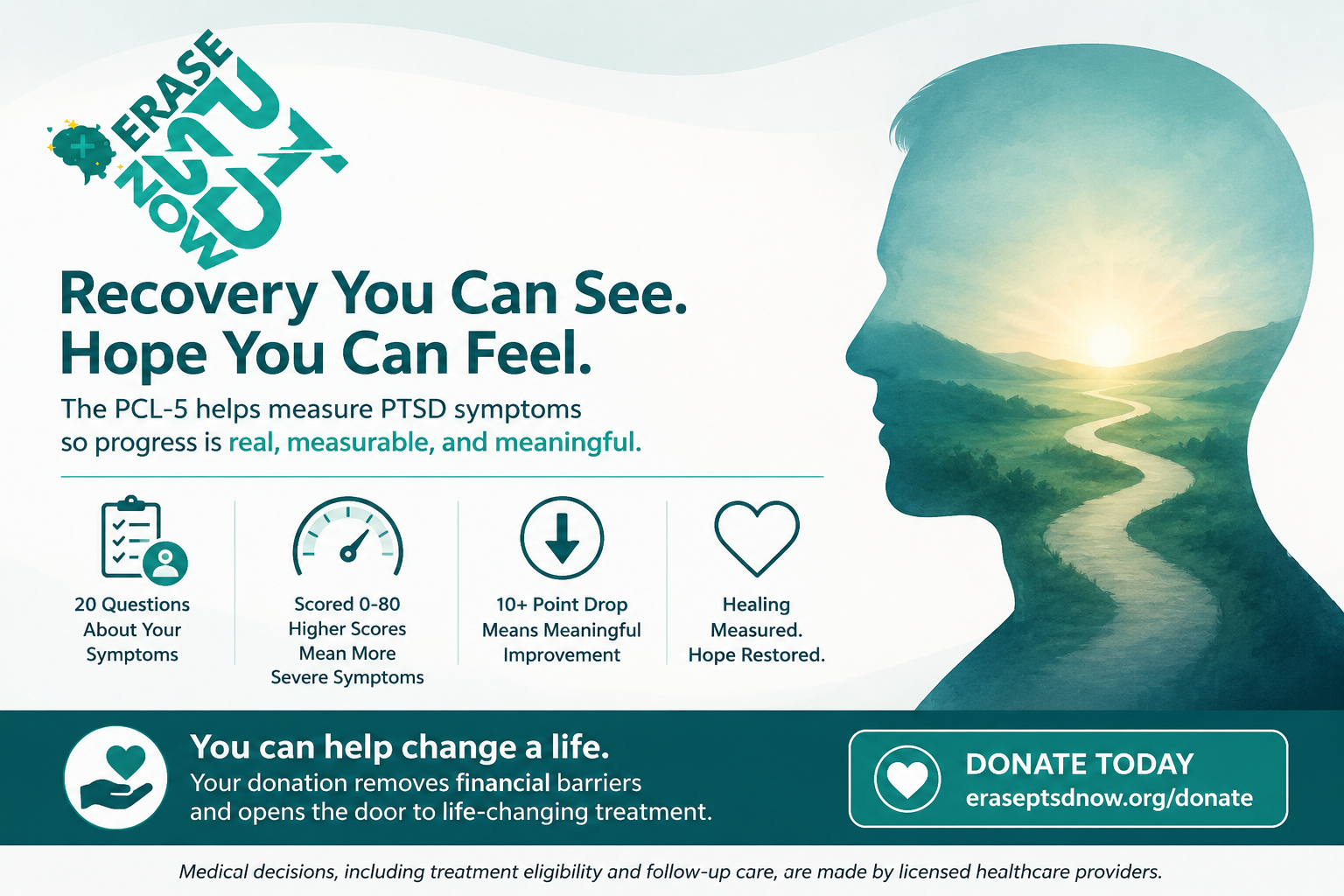
The PCL-5 is a 20-question questionnaire developed by the U.S. Department of Veterans Affairs' National Center for PTSD. It is used around the world by physicians, psychologists, researchers, and healthcare systems to measure the severity of PTSD symptoms.
Individuals answer questions about how much certain symptoms have affected them during the previous month.
Each question is scored from:
0 = Not at all
1 = A little bit
2 = Moderately
3 = Quite a bit
4 = Extremely
The scores are combined to create a total score ranging from 0 to 80, with higher scores reflecting more severe PTSD symptoms.
What Do the Scores Mean?
Although only a qualified healthcare professional can diagnose PTSD, research has shown that:
A score of 33 or higher generally indicates clinically significant PTSD symptoms that warrant further evaluation.
A decrease of 10 points or more is considered a clinically meaningful improvement. In other words, the change is significant enough that most people notice real improvements in daily life.
For many people, this may mean sleeping better, feeling less anxious, becoming more present with family, returning to work, or simply feeling like themselves again.
Why Is the PCL-5 Important?
PTSD affects both the mind and the body's stress response. While people often describe feeling calmer after treatment, clinicians also want objective ways to measure that progress.
The PCL-5 helps providers:
Track symptom changes over time.
Measure treatment effectiveness.
Guide future clinical decisions.
Provide patients with measurable evidence of their recovery.
Instead of relying only on how someone feels on a given day, the PCL-5 offers a standardized way to document meaningful change.
How Does This Relate to Stellate Ganglion Block (SGB)?
Many individuals receiving a Stellate Ganglion Block (SGB) for PTSD complete the PCL-5 before and after treatment.
SGB is designed to reduce overactivity within the sympathetic nervous system, often described as the body's "fight or flight" response. As that biological stress response begins to calm, many people report improvements in symptoms such as hypervigilance, anxiety, sleep disturbances, irritability, and concentration.
The PCL-5 allows clinicians to measure whether those improvements are reflected in validated symptom scores.
Every person's recovery is different. Some individuals experience rapid improvements, while others may require additional care or other treatments as determined by their healthcare providers.
Erase PTSD Now's Commitment
At Erase PTSD Now, we are committed to helping individuals access innovative, evidence-informed care for PTSD by removing financial barriers to treatment.
Our role is to connect eligible individuals with qualified medical providers and help make treatment accessible. Medical decisions, including whether a person is an appropriate candidate for SGB, whether additional treatment is recommended, and how recovery should be monitored, are always made by the treating healthcare professionals.
We believe the best outcomes happen when compassionate care is supported by objective evidence, trusted clinical expertise, and continued research.
Recovery Can Be Measured
Trauma recovery is about more than surviving. It's about reclaiming sleep, relationships, peace of mind, and the ability to fully engage in life again.
Tools like the PCL-5 help demonstrate that healing is real, measurable, and possible.
Every score represents more than a number. It represents a person taking another step toward hope.
Help Someone Take Their Next Step
Thousands of individuals are still waiting for access to life-changing PTSD treatment.
Your generosity helps Erase PTSD Now remove financial barriers so more people can receive innovative care and begin their own recovery journey.
Medical Disclaimer: This article is for educational purposes only and should not be considered medical advice. Erase PTSD Now does not diagnose or provide medical treatment. All treatment decisions, including the use of Stellate Ganglion Block (SGB), patient eligibility, and follow-up care, are determined solely by licensed healthcare providers based on each individual's medical history and clinical evaluation. If you believe you may be experiencing PTSD or another medical condition, please consult a qualified healthcare professional.